UMIE Datasets: Unified Medical Imaging Ecosystem
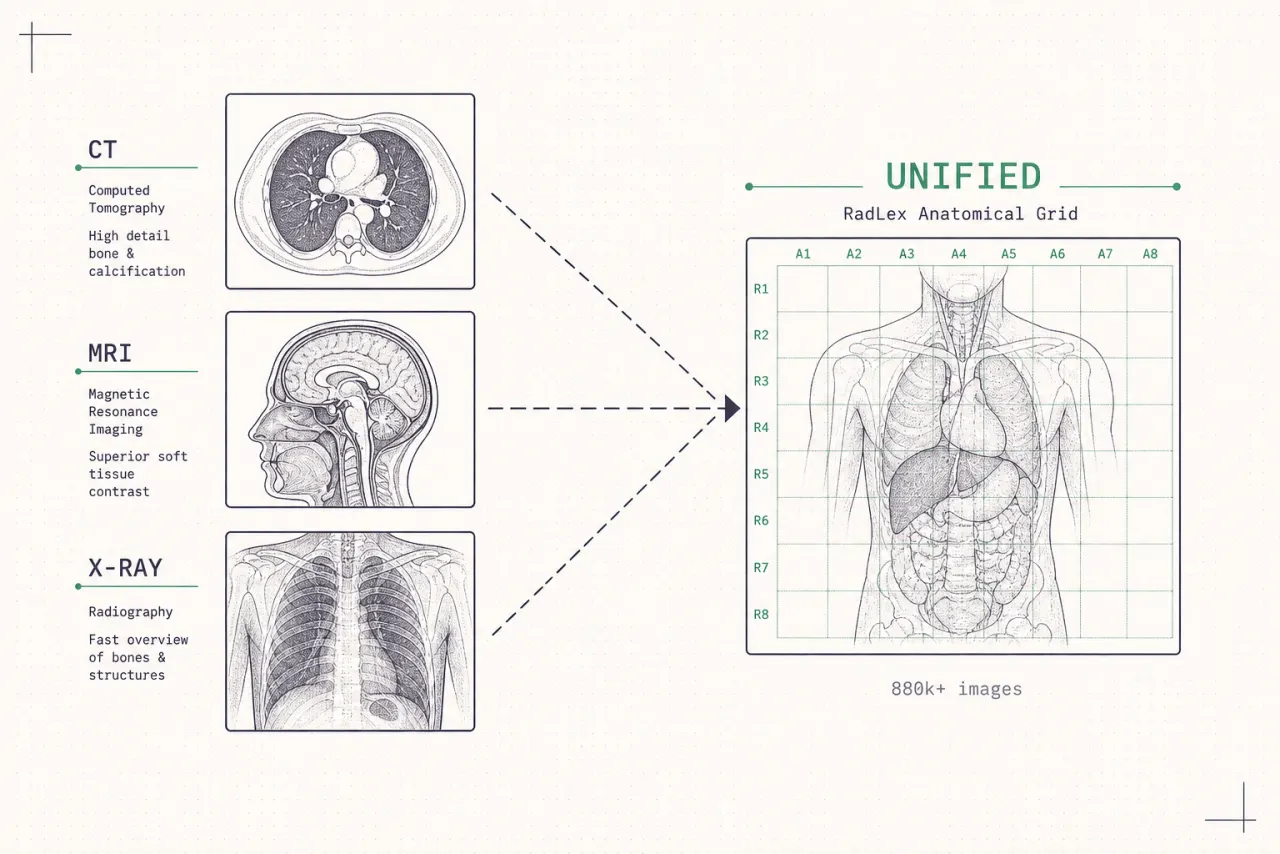
Open-source pipelines that standardize 880k+ images across 20+ medical imaging datasets (CT, MRI, X-ray) into a unified format with RadLex-compliant labels.
Overview
UMIE (Unified Medical Imaging Environment) standardizes 882,774 images across 20+ open medical datasets covering CT, MRI, and X-ray modalities. The pipelines download, clean, and annotate each source, outputting .png assets with harmonized metadata, segmentation masks, and RadLex-compliant labels. A shared ontology eliminates label drift and enables frictionless multi-dataset training.
Pipeline Design
Modular, scikit-learn-style steps transform DICOM, NIfTI, TIFF, and JPG sources into a consistent structure. Reusable components handle spacing normalization, mask extraction, ontology remapping, and file-tree creation. Adding a new dataset typically means composing existing steps and configuring paths inside config/runner_config.py.
Dataset Coverage
Covered corpora include KITS-23, Coronahack, Brain Tumor MRI, ChestX-ray14, COCA CT calcium, BrainMetShare, CT-ORG, LIDC-IDRI, CMMD, and many more — including segmentation-ready datasets with paired masks.
Tooling and Ops
Poetry manages dependencies, pre-commit enforces formatting, and GitHub Actions run the test matrix. Contributors can dry-run checks with pre-commit run --all-files and execute run_tests.sh for integration coverage. The roadmap targets HuggingFace dataset exports and richer curation dashboards.
Why It Matters
UMIE gives researchers a turnkey way to assemble large, diverse medical imaging corpora without redoing preprocessing. It reduces ontology mismatches when mixing classification and segmentation tasks, and encourages reproducibility by scripting every download, conversion, and metadata step in the open.
Zobacz także
RocketRAG
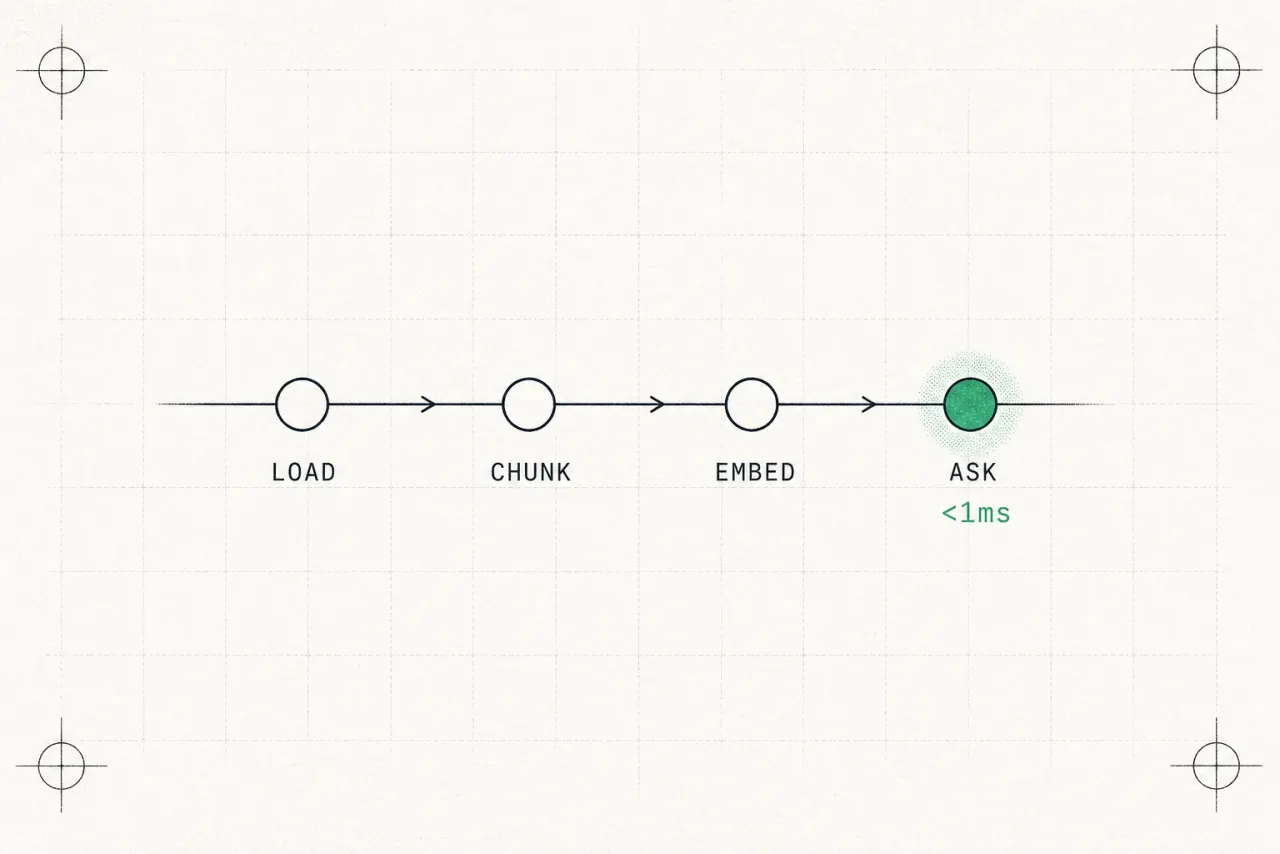
A speed-focused Retrieval-Augmented Generation framework packaging document ingestion, semantic chunking, vector storage, and LLM inference into a pluggable CLI and FastAPI toolkit.
Zobacz projekt →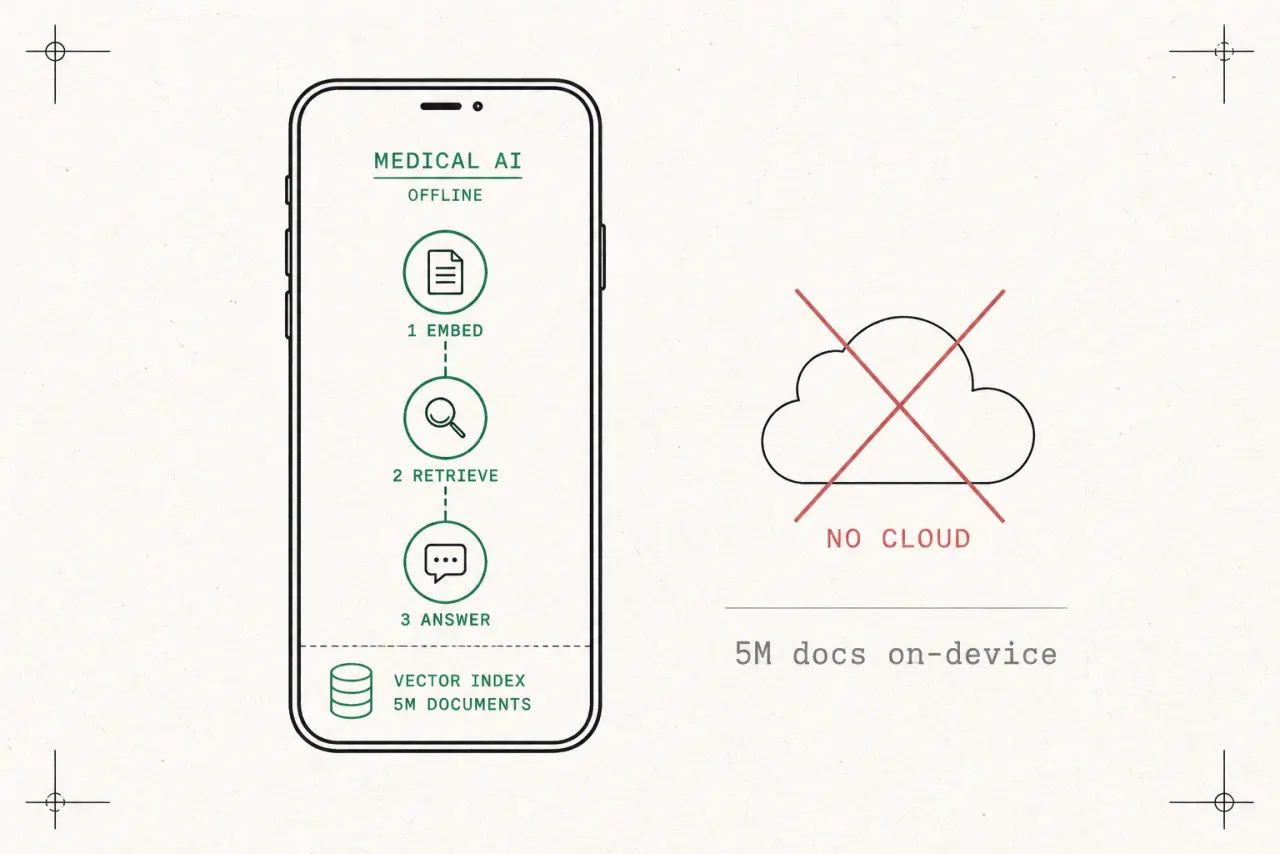
LOMA — Offline Medical AI Assistant
A zero-cloud mobile medical assistant that runs the full pipeline — embeddings, retrieval, and language model responses — entirely on the user's phone.
Zobacz projekt →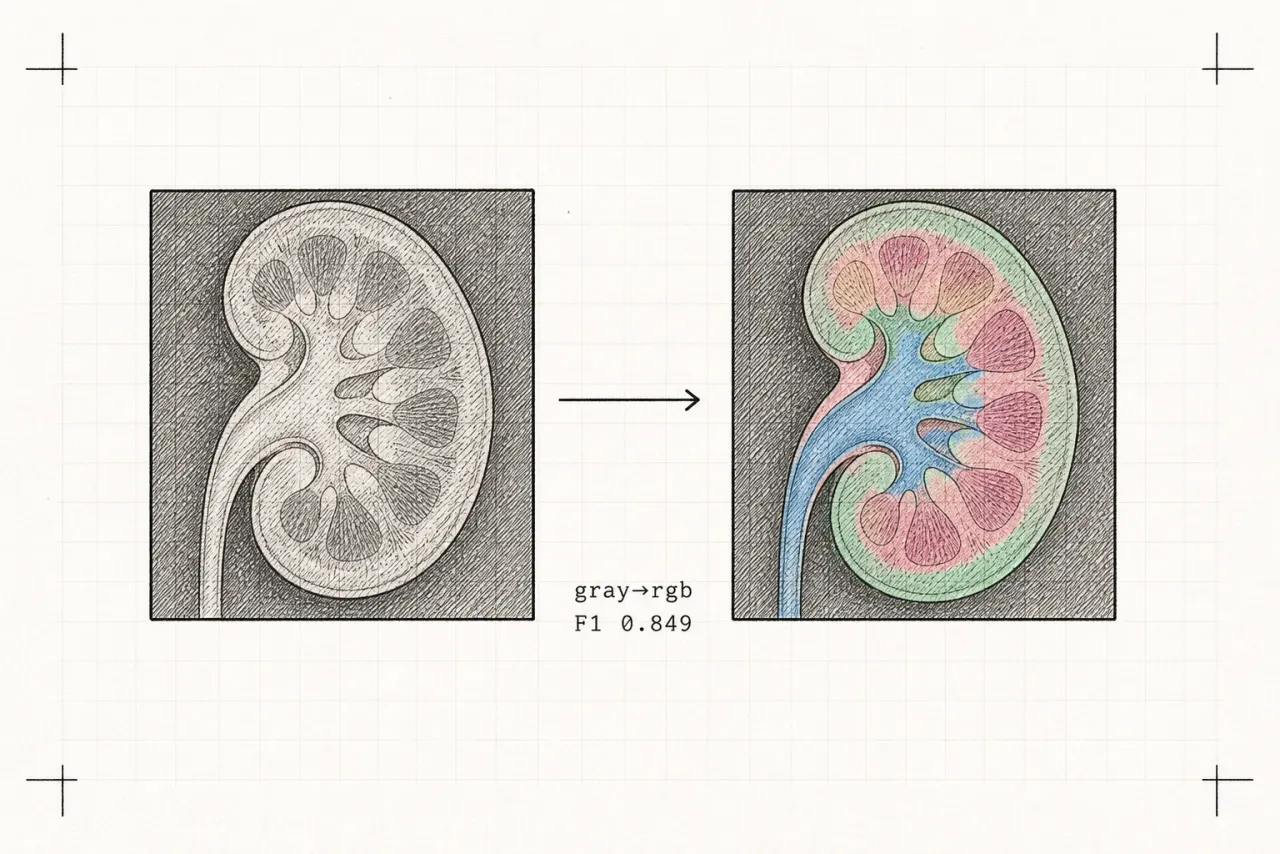
ColorNephroNet
A two-stage CNN pipeline that colourises grayscale kidney CT scans into pseudo-RGB images to improve malignancy prediction by leveraging features learned from colour image datasets.
Zobacz projekt →