RocketRAG: Performance-First Retrieval-Augmented Generation
A speed-focused Retrieval-Augmented Generation framework packaging document ingestion, semantic chunking, vector storage, and LLM inference into a pluggable CLI and FastAPI toolkit.
Overview
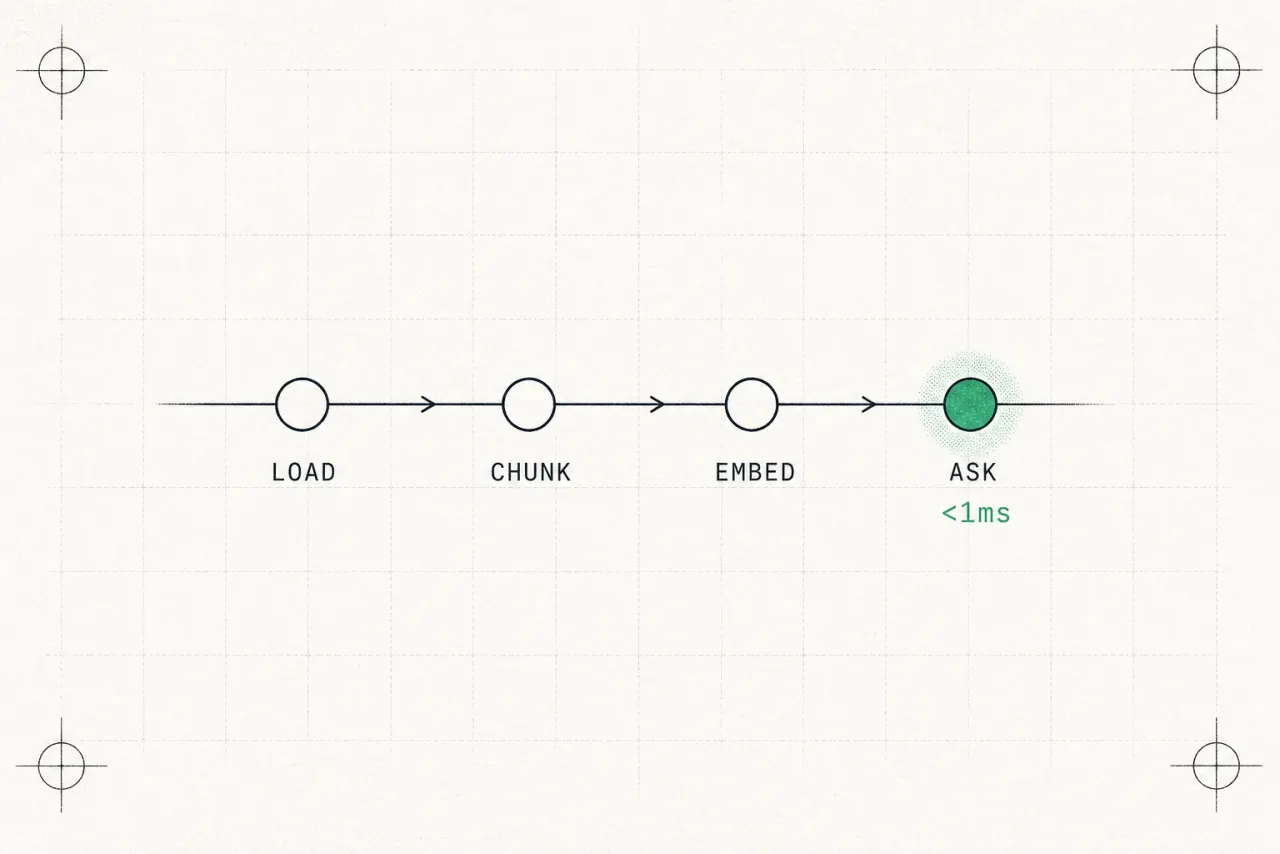
RocketRAG is a high-performance Retrieval-Augmented Generation system designed with a focus on speed, simplicity, and extensibility. It packages document ingestion, semantic chunking, vector storage, and LLM inference into a pluggable toolkit that runs as both a CLI utility and a FastAPI server. All components are swappable, so the same pipeline can power notebooks, cron jobs, or production APIs.
Architecture Highlights
- Load — Kreuzberg-based document loaders stream PDFs, Markdown, TXT, and more into a unified format.
- Chunk — Chonkie semantic chunking (model2vec) preserves context while staying small enough for laptop use.
- Vectorize — Sentence Transformers (or custom encoders) generate embeddings with batched throughput.
- Store — Milvus Lite keeps the vector DB local, delivering sub-millisecond retrieval without extra dependencies.
- Generate — llama-cpp-python serves quantized GGUF models for low-latency inference on commodity GPUs or CPUs.
The plugin architecture defines BaseLoader, BaseChunker, BaseVectorizer, BaseLLM, and BaseVectorDB interfaces, so adding a new chunker or embedding model is just a small class.
Usage
pip install rocketrag (or uvx rocketrag ...) provides the CLI immediately. rocketrag prepare --data-dir ./docs builds the vector index, and rocketrag ask "prompt" queries it. rocketrag server --host 0.0.0.0 --port 8000 exposes OpenAI-compatible endpoints, realtime streaming, vector visualizations, and a document browser.
Why It Matters
RocketRAG is optimized for speed end to end and ships batteries-included with a verbose CLI, full FastAPI server, health checks, visualizers, and a chat UI — while remaining fully extensible for custom loaders, chunkers, vectorizers, or LLM runtimes.
Zobacz także
UMIE Datasets
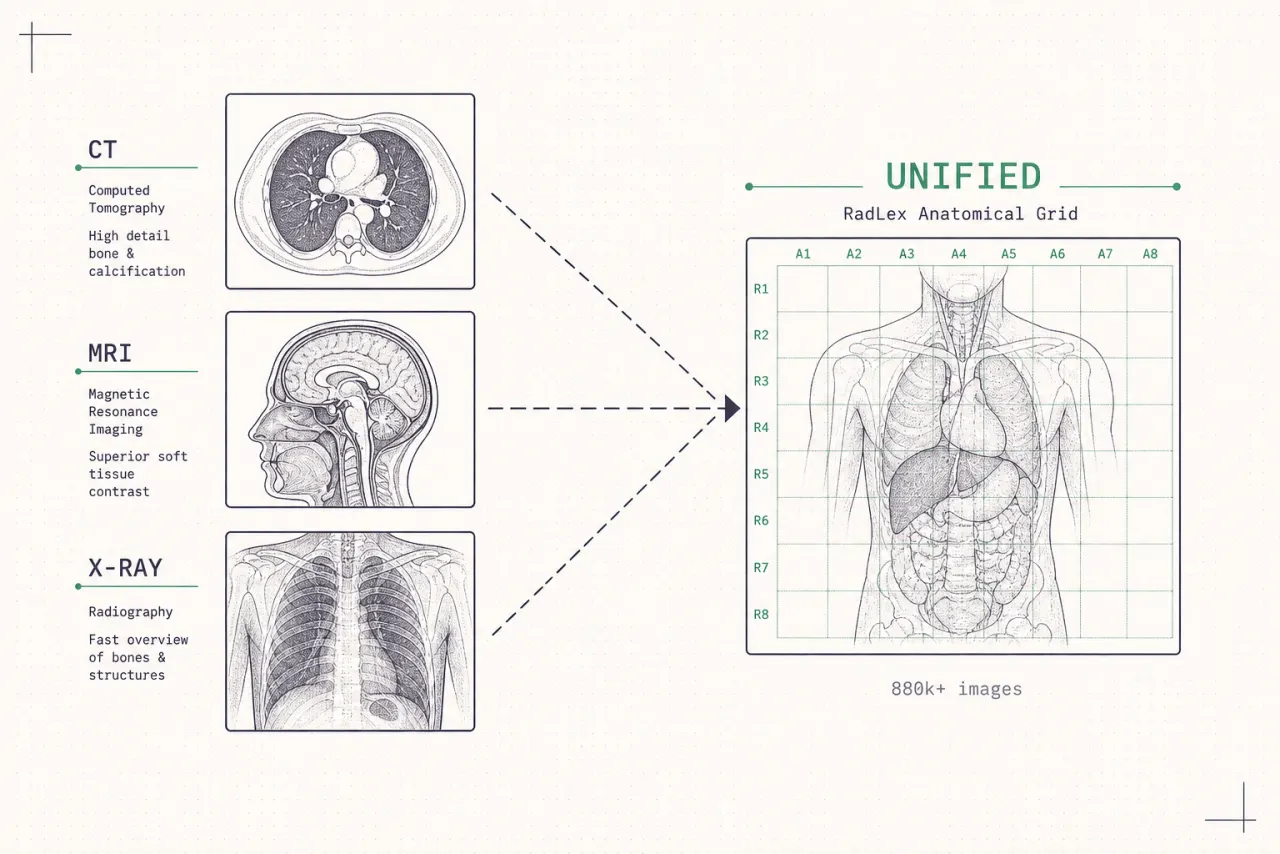
Open-source pipelines that standardize 880k+ images across 20+ medical imaging datasets (CT, MRI, X-ray) into a unified format with RadLex-compliant labels.
Zobacz projekt →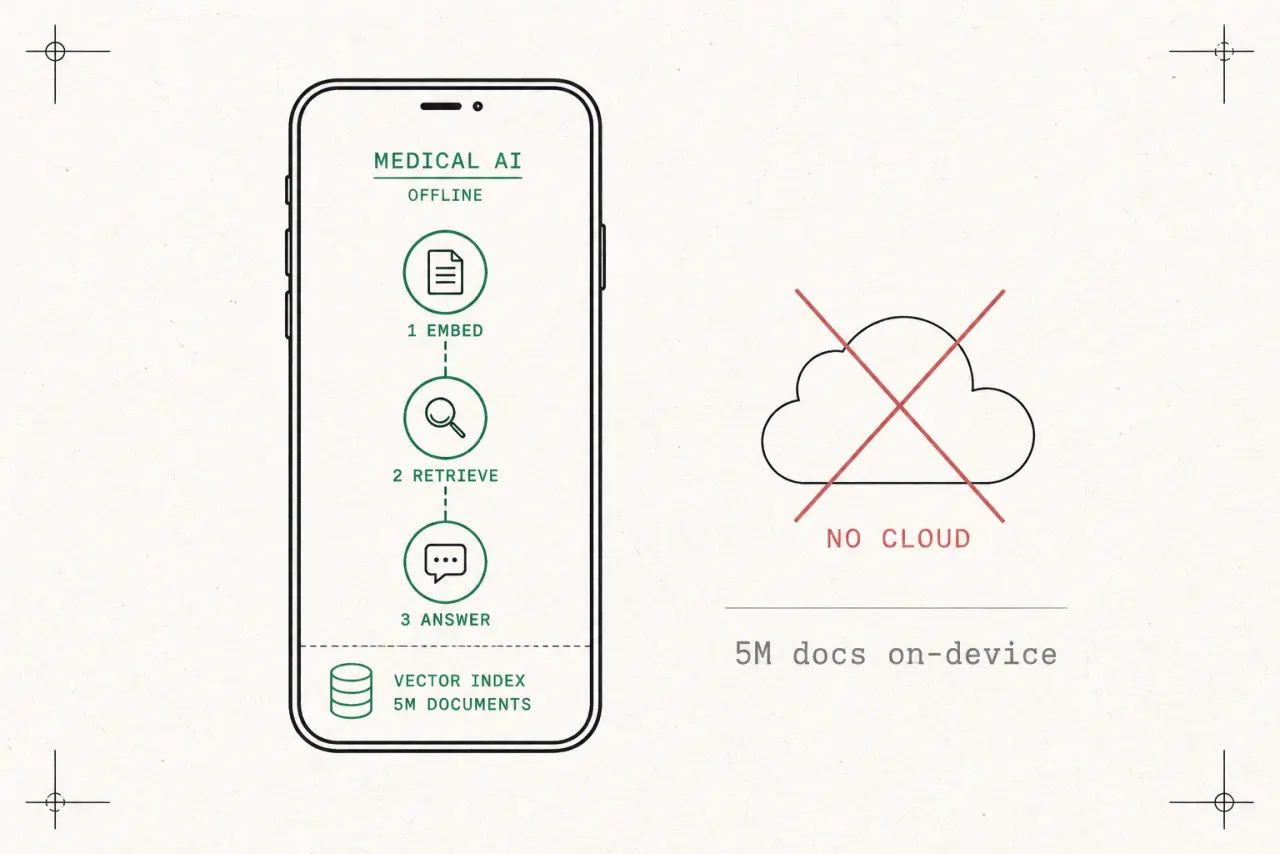
LOMA — Offline Medical AI Assistant
A zero-cloud mobile medical assistant that runs the full pipeline — embeddings, retrieval, and language model responses — entirely on the user's phone.
Zobacz projekt →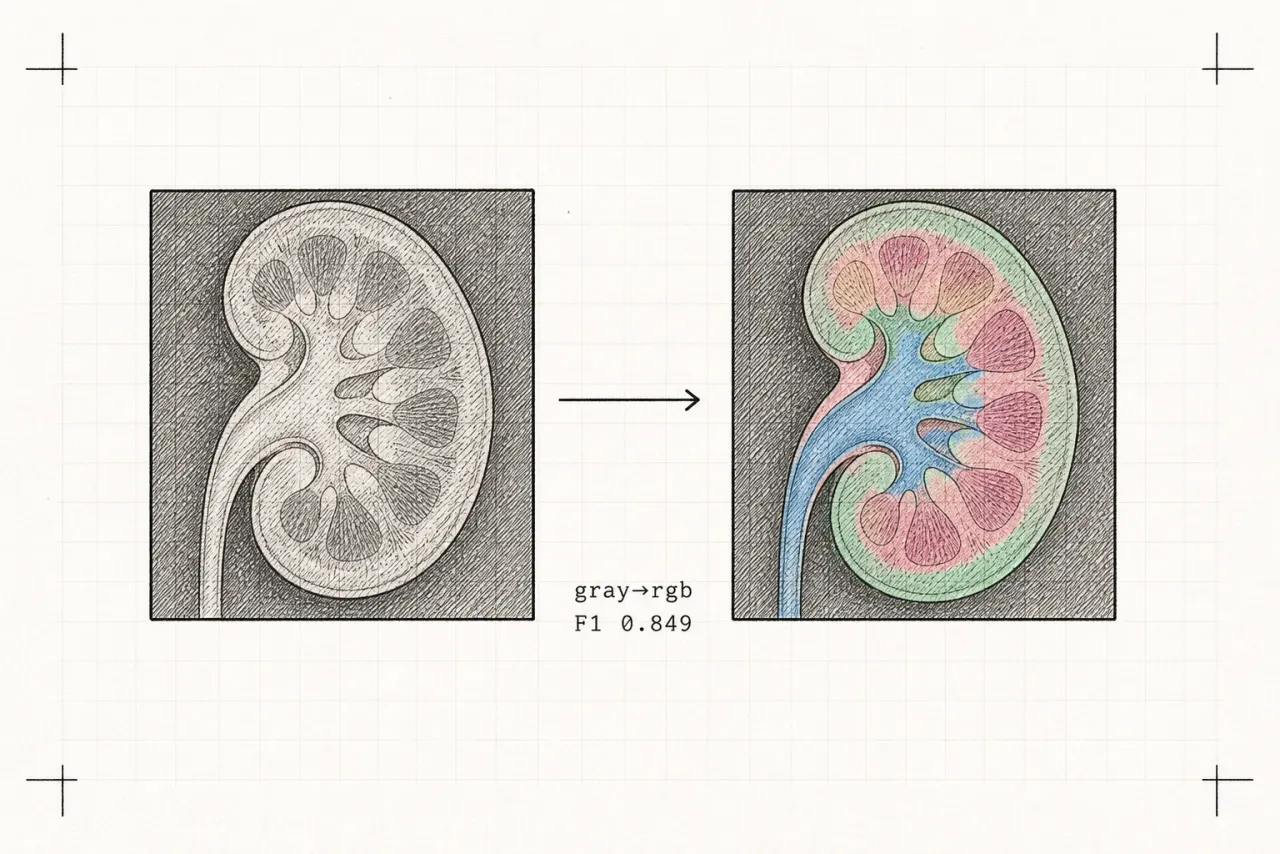
ColorNephroNet
A two-stage CNN pipeline that colourises grayscale kidney CT scans into pseudo-RGB images to improve malignancy prediction by leveraging features learned from colour image datasets.
Zobacz projekt →