LOMA: Mobile Offline Medical AI Assistant
A zero-cloud mobile medical assistant that runs the full pipeline — embeddings, retrieval, and language model responses — entirely on the user's phone.
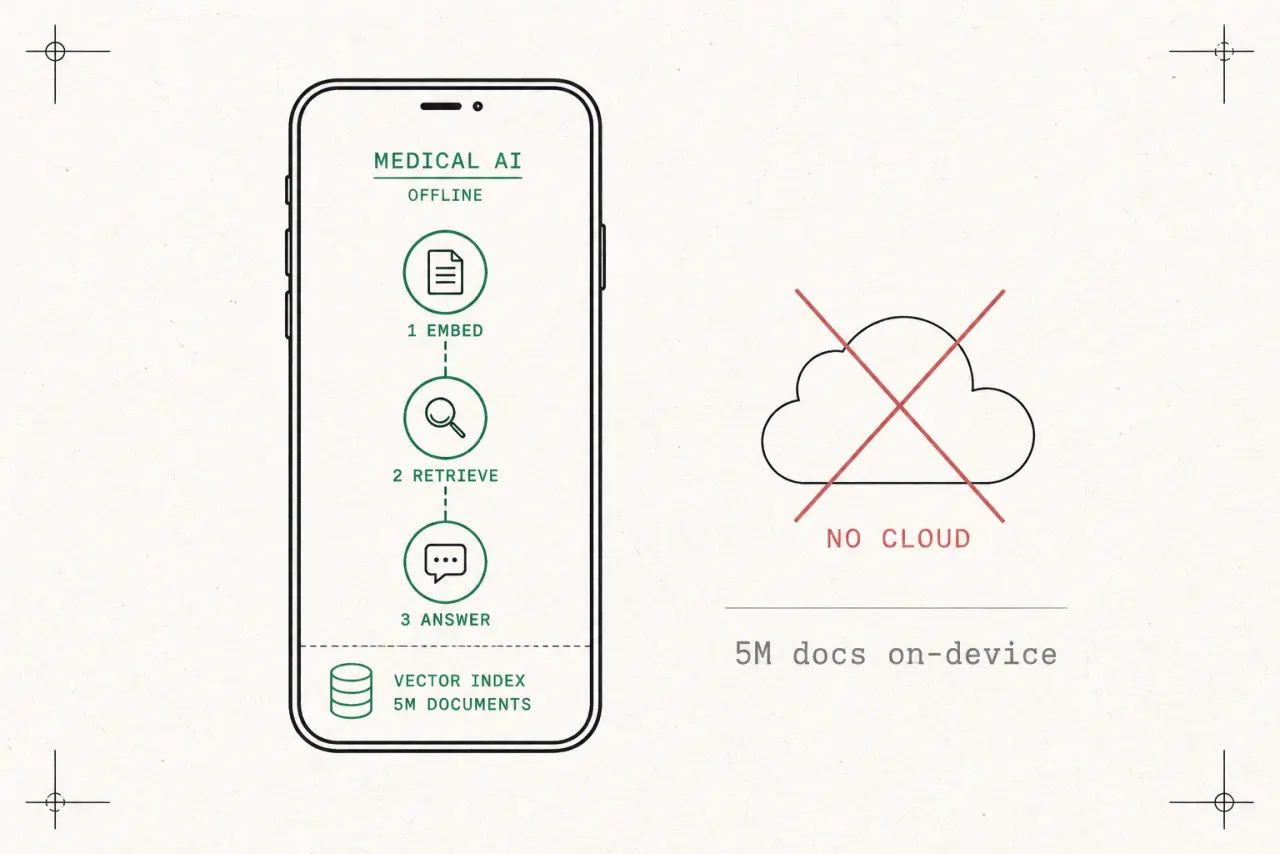
Motivation
Billions of people need reliable medical answers where connectivity is limited or privacy is paramount. LOMA (Local Offline Medical Assistant) delivers a zero-cloud experience: the entire assistant, from embeddings to language model responses, runs on the user's phone.
System Design
- Model — Gemma 3n converted to a 4.79 GB GGUF checkpoint, served via llama.rn with GPU offload for up to 99 layers.
- Retrieval — A doc2query-enhanced RAG stack indexes 5 million Q&A-style medical documents so answers are grounded and cite exact sources.
- Embeddings — ExecuTorch runs all-MiniLM-L6-v2 locally, generating 384-d vectors in ~70 ms using only 150–190 MB RAM.
- Database — Turso (SQLite + vector extensions) ships as a pre-built bundle synced through Cloudflare R2; cosine search yields results without ballooning storage.
- Frontend — A React Native application with shared abstractions for storage, queue-based inference, and lazy loading keeps both iOS and Android responsive.
Workflow
A user question is normalized into Gemma's conversation format. The query embedding searches both long-form documents and FAQ-style pairs, retrieved passages are assembled with structured citations, and Gemma 3n generates an answer entirely on-device — never sharing data with servers.
Impact and Metrics
Privacy-preserving responses with verifiable citations improve trust for clinical decision support. LOMA works offline after the initial 4.79 GB download, with the model and database fitting comfortably on mid-range phones. Vector search takes 94 ms for 50k vectors, and response latency stays under one minute even on modest hardware.
Zobacz także
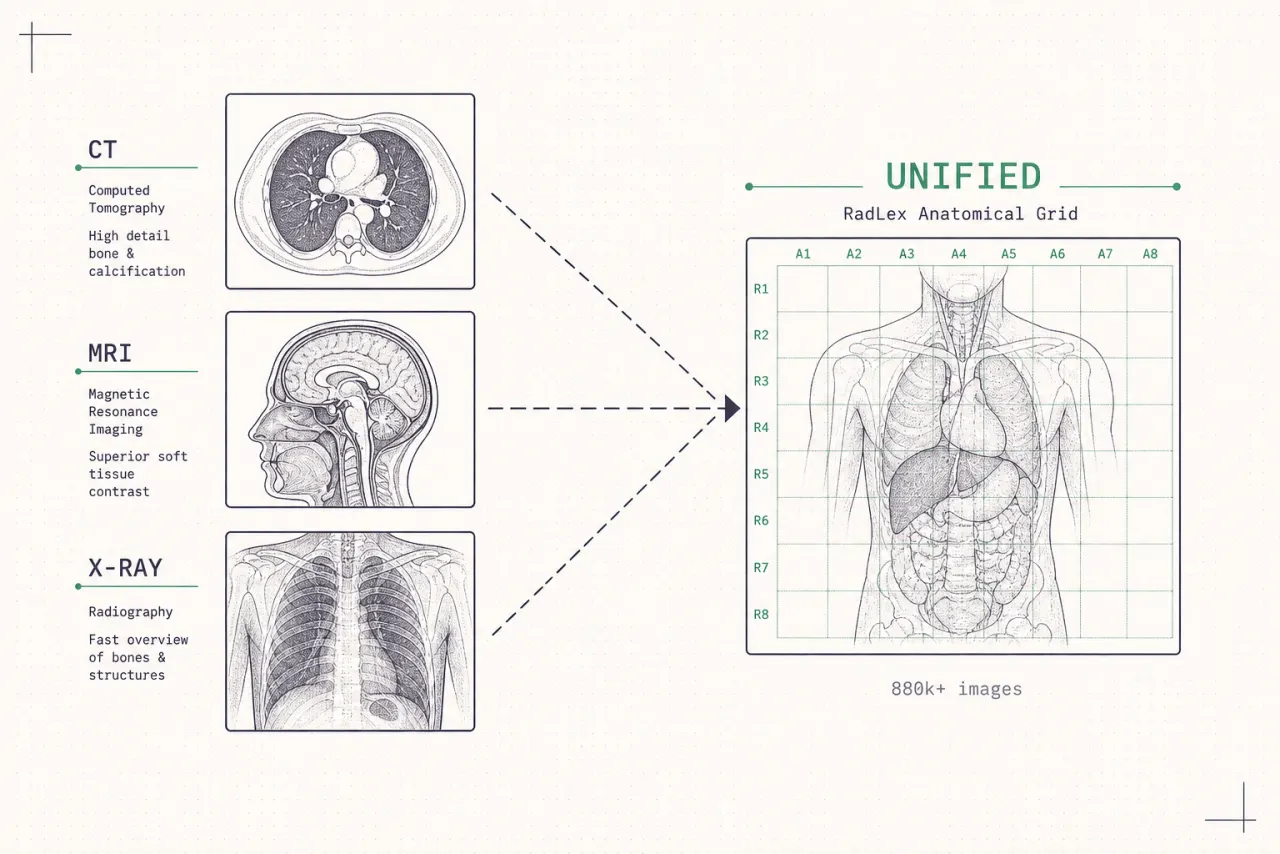
UMIE Datasets
Open-source pipelines that standardize 880k+ images across 20+ medical imaging datasets (CT, MRI, X-ray) into a unified format with RadLex-compliant labels.
Zobacz projekt →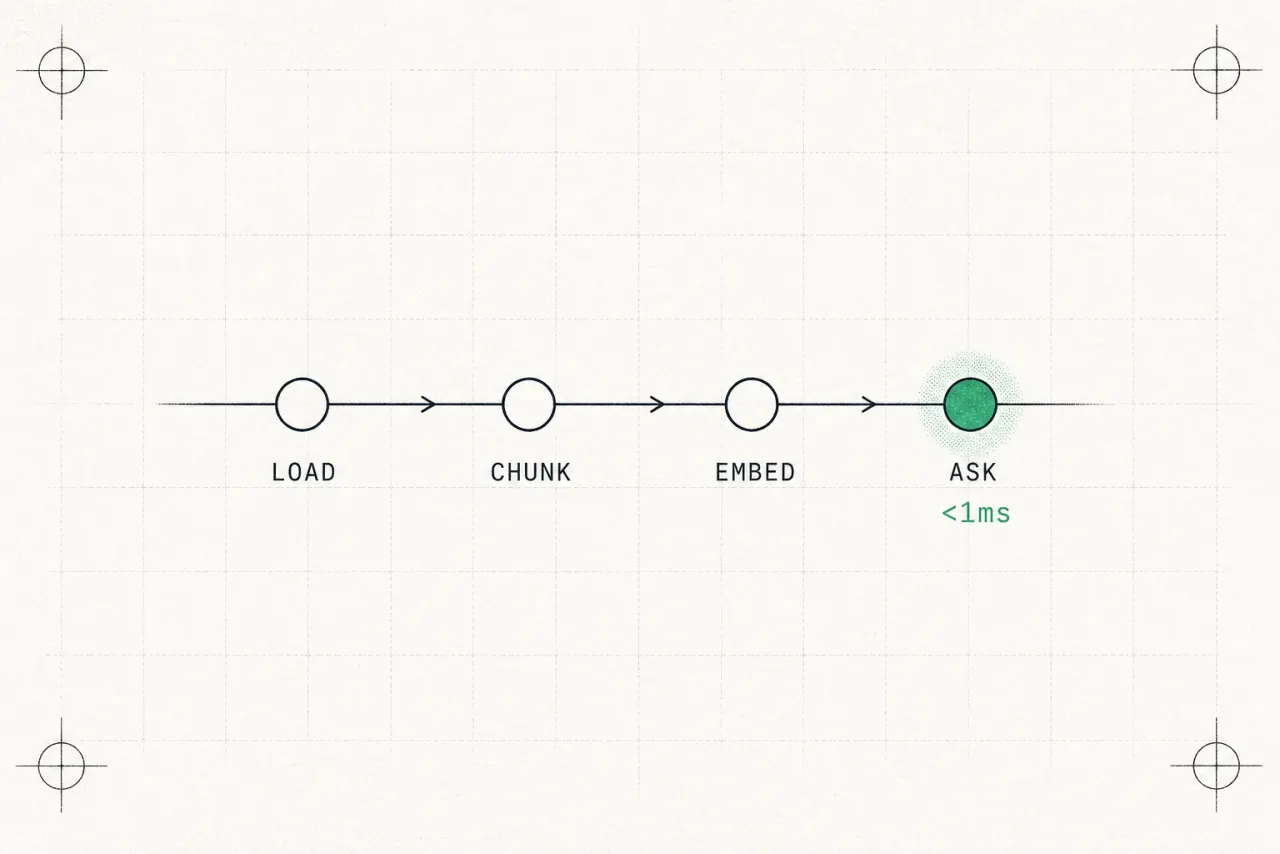
RocketRAG
A speed-focused Retrieval-Augmented Generation framework packaging document ingestion, semantic chunking, vector storage, and LLM inference into a pluggable CLI and FastAPI toolkit.
Zobacz projekt →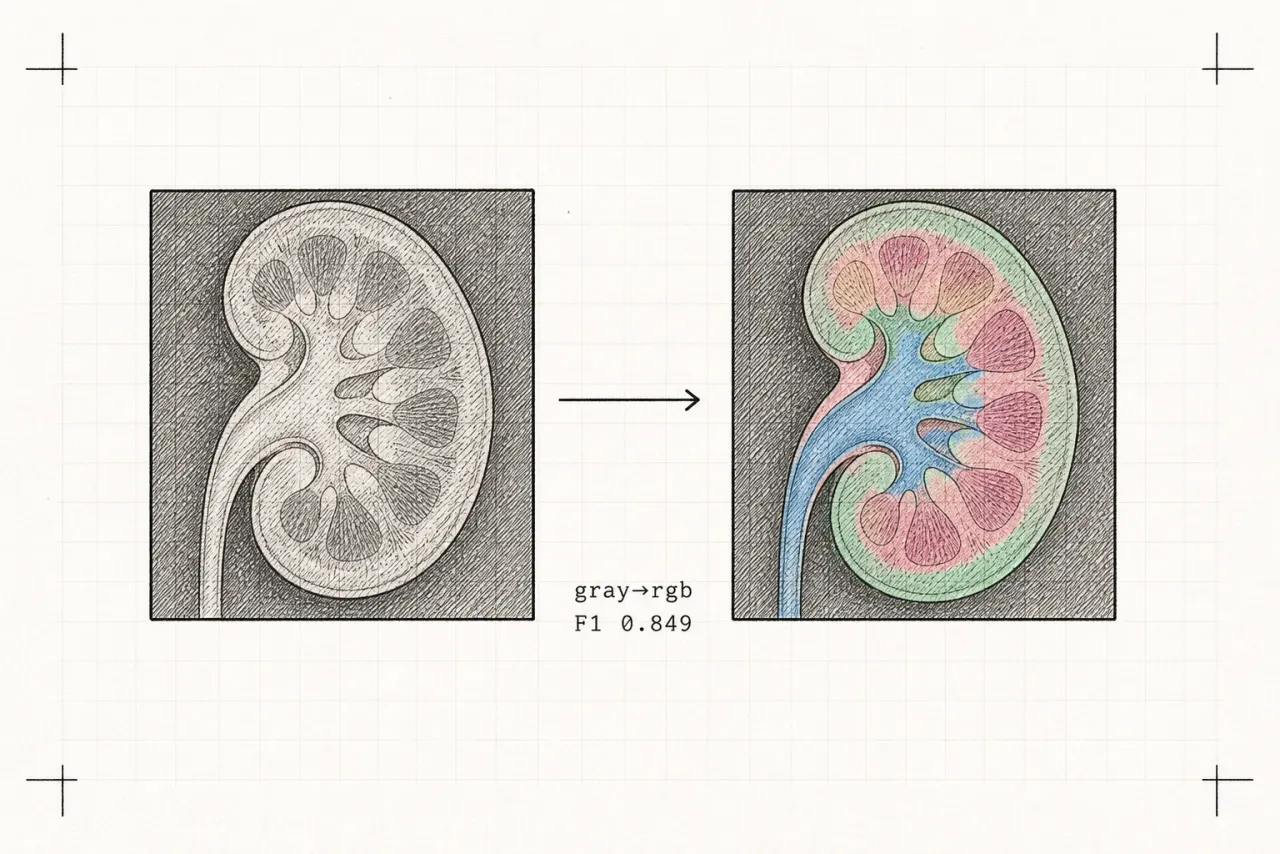
ColorNephroNet
A two-stage CNN pipeline that colourises grayscale kidney CT scans into pseudo-RGB images to improve malignancy prediction by leveraging features learned from colour image datasets.
Zobacz projekt →