Machine-Aided Detection of SARS-CoV-2 from Complete Blood Count
Machine learning models that detect SARS-CoV-2 infection from routine complete blood count (CBC) tests, offering a cost-effective, scalable screening tool to complement RT-PCR.
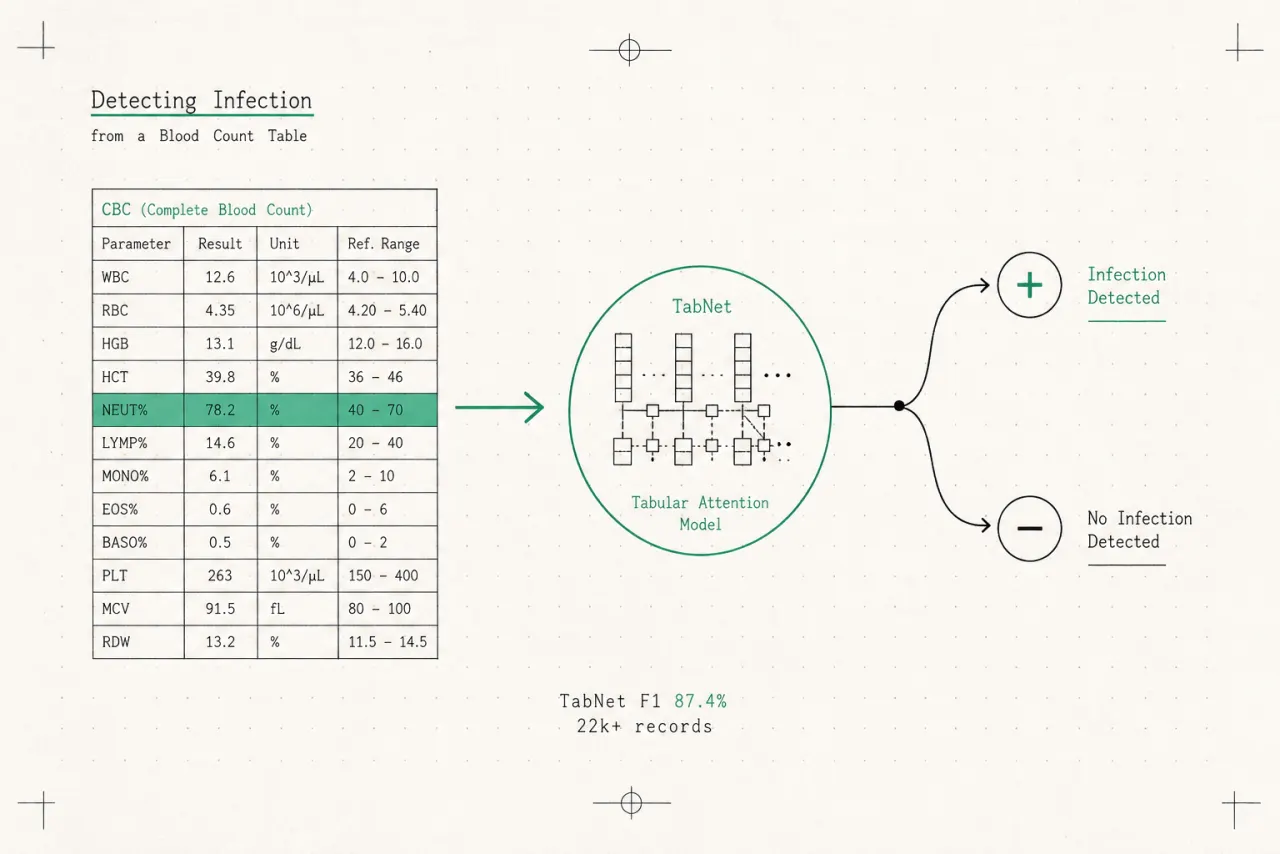
Overview
This study investigated whether routine complete blood count (CBC) tests can be used to detect SARS-CoV-2 infection using machine learning. The motivation was to create a cost-effective, scalable screening tool that could complement or preselect patients for RT-PCR testing.
Data Sources
Two datasets were used: the UCC dataset from the University Clinical Centre in Gdańsk, Poland (22,463 patient records, 2019–2020), and a Zenodo dataset from San Raffaele Hospital, Italy (1,624 patients, 2020–2021, from Cabitza et al.). COVID-19 status was determined by RT-PCR, with ambiguous or borderline cases excluded.
Preprocessing and Features
Only CBC features common to both datasets were selected, and highly correlated pairs (correlation > 0.5) were pruned. Missing continuous values were imputed using k-nearest neighbors, features were standardized, and SMOTE was used to address class imbalance. The final feature set comprised nine CBC parameters — HGB, MCV, MCHC, PLT, WBC, BA, LY, MO, EO — plus age and sex.
Models and Results
Four models were trained and compared: XGBoost, CatBoost, a fully connected ANN, and TabNet. On the balanced UCC dataset, TabNet achieved the highest performance with an F1-score of 87.4% and AUC of 87.1%, substantially outperforming XGBoost (66.3% F1), CatBoost (70.5%), and the ANN (72.0%). Balancing the data notably increased specificity and overall F1 across all models.
Zobacz także
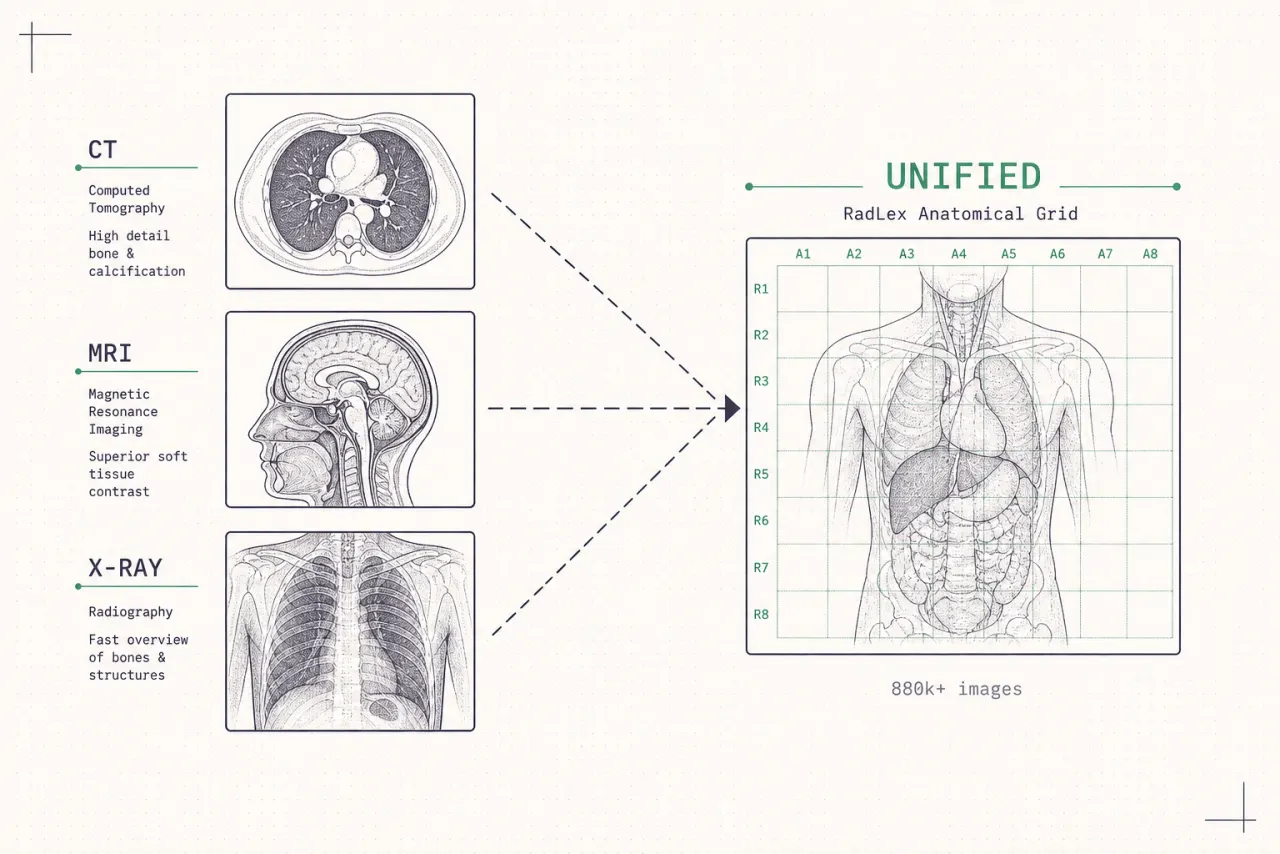
UMIE Datasets
Open-source pipelines that standardize 880k+ images across 20+ medical imaging datasets (CT, MRI, X-ray) into a unified format with RadLex-compliant labels.
Zobacz projekt →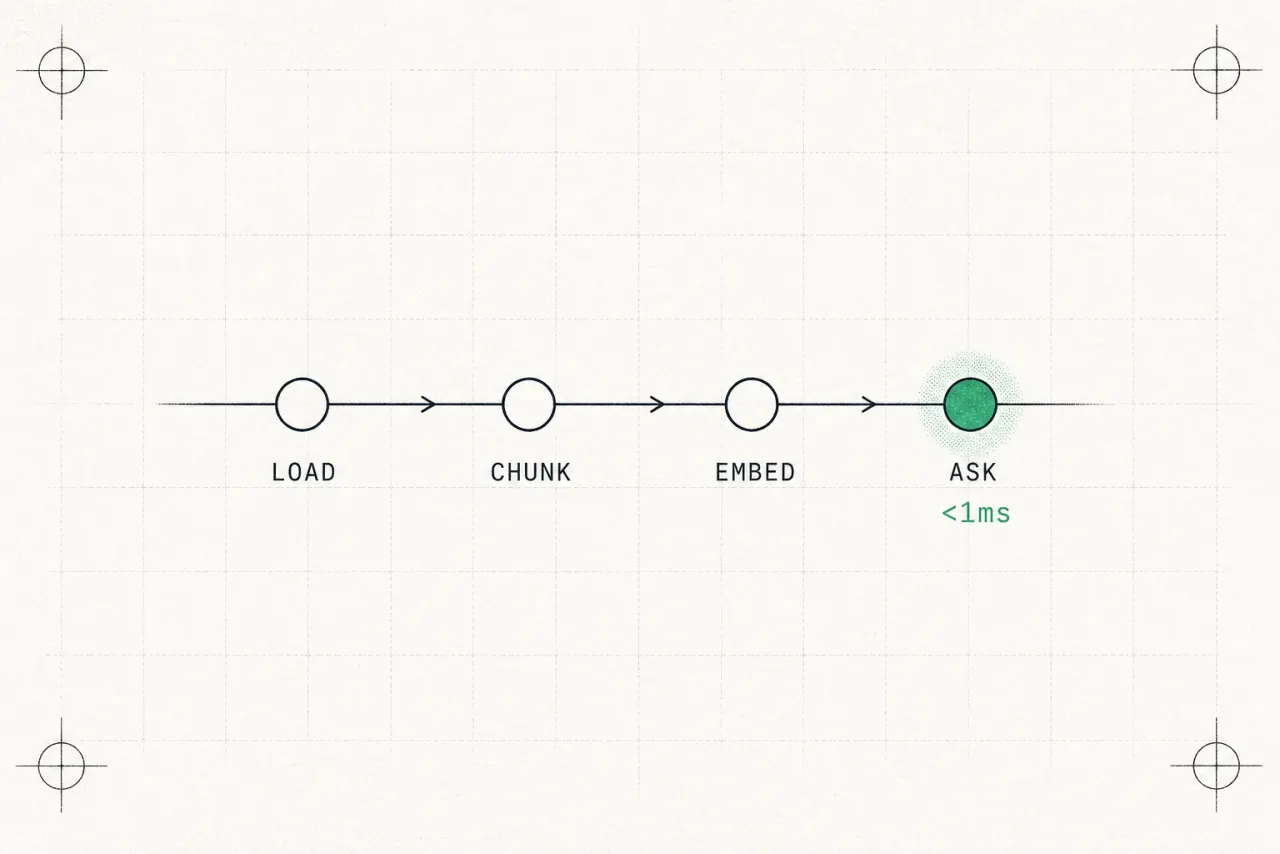
RocketRAG
A speed-focused Retrieval-Augmented Generation framework packaging document ingestion, semantic chunking, vector storage, and LLM inference into a pluggable CLI and FastAPI toolkit.
Zobacz projekt →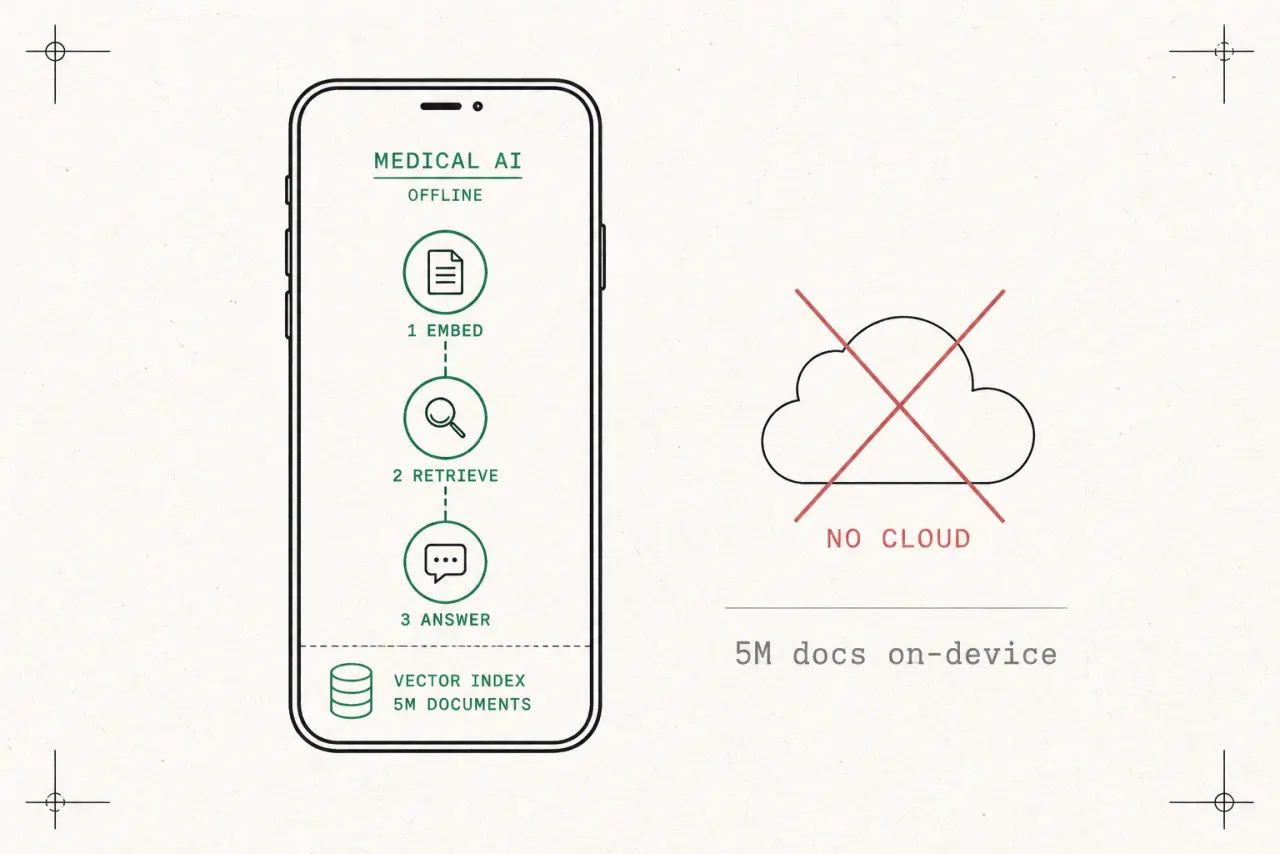
LOMA — Offline Medical AI Assistant
A zero-cloud mobile medical assistant that runs the full pipeline — embeddings, retrieval, and language model responses — entirely on the user's phone.
Zobacz projekt →