Predicting Catheter-Induced Coronary and Aortic Injuries Using Machine Learning
Machine learning models that predict catheter-induced coronary and aortic dissections from clinical, anatomical, and procedural data across more than 80,000 catheterized patients.
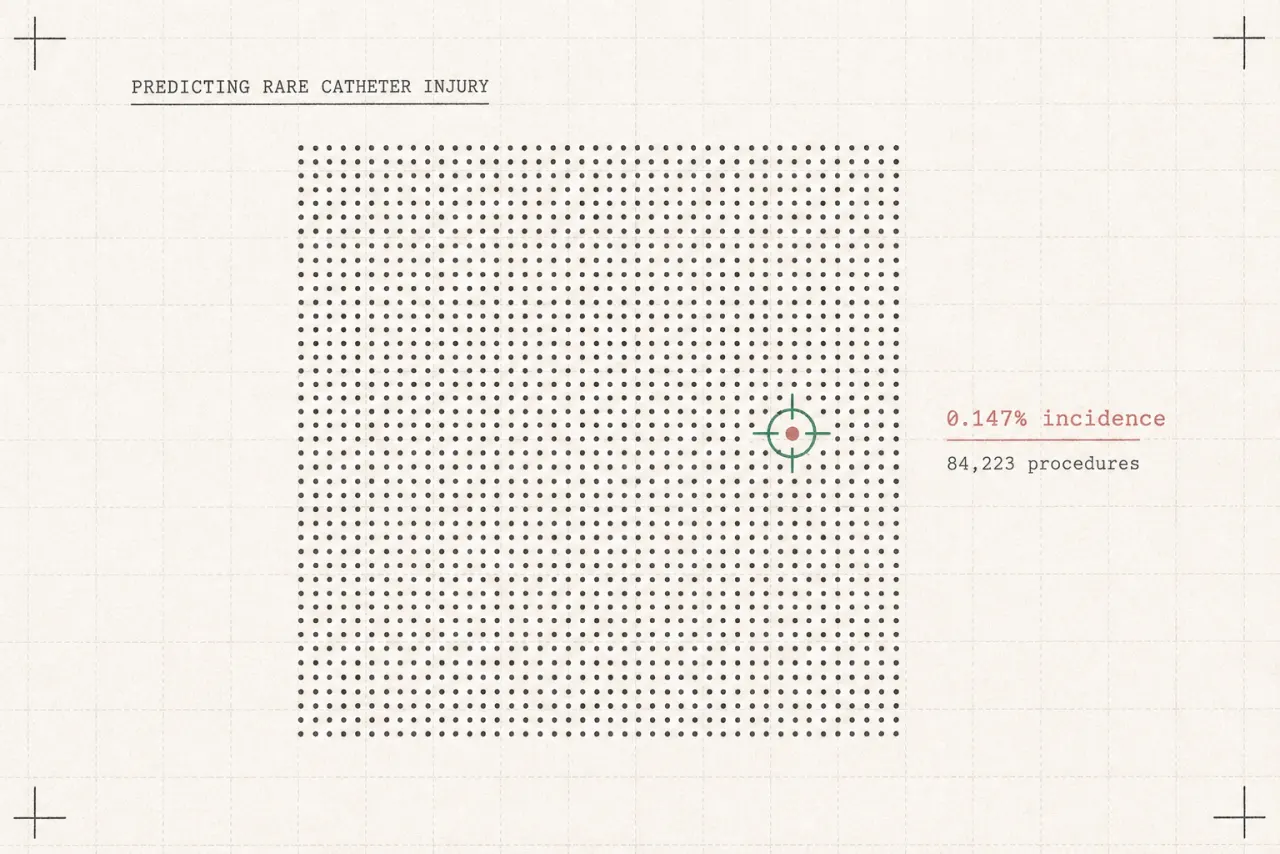
Overview
In this study we developed and evaluated machine learning models to predict catheter-induced coronary and aortic dissections (CID) based on clinical, anatomical, and procedural data from more than 80,000 catheterized patients.
Dataset and Cohort
We retrospectively analyzed 84,223 diagnostic and interventional coronary procedures performed between 2000 and 2022 at two high-volume cardiac centers. From these, 124 confirmed cases of CID were identified and adjudicated by expert reviewers, with non-catheter-related dissections excluded. Each case included detailed demographics, comorbidities, procedural data, and angiographic features, categorized using the NHLBI and Dunning classifications.
Variables and Modeling
Anatomical variables (small or stenotic ostium, atypical coronary origin, chronic total occlusion), procedural variables (guiding catheter use, radial vs. femoral access, target vessel), and clinical variables (hypertension, prior PCI, acute MI, chronic renal failure, COPD, and others) were used. Given the very low event rate (0.147%), class imbalance was addressed with SMOTE, the data was split 70/30, and three-fold cross-validation ensured stable estimates. Six algorithms — Logistic Regression, Decision Tree, Random Forest, Naive Bayes, KNN, and XGBoost — were trained in Python using sklearn, xgboost, imbalanced-learn, and dalex.
Results
The incidence of CID was 0.147% overall, with aortic involvement in 0.023%. Key procedural correlates were guiding catheter use (84% of cases), radial access (80%), and PCI procedures (84%). XGBoost achieved the best balance between precision (0.748) and recall (0.363), with an F1-score of 0.488, outperforming the other algorithms on the metrics that matter most for not missing true positives.
Zobacz także
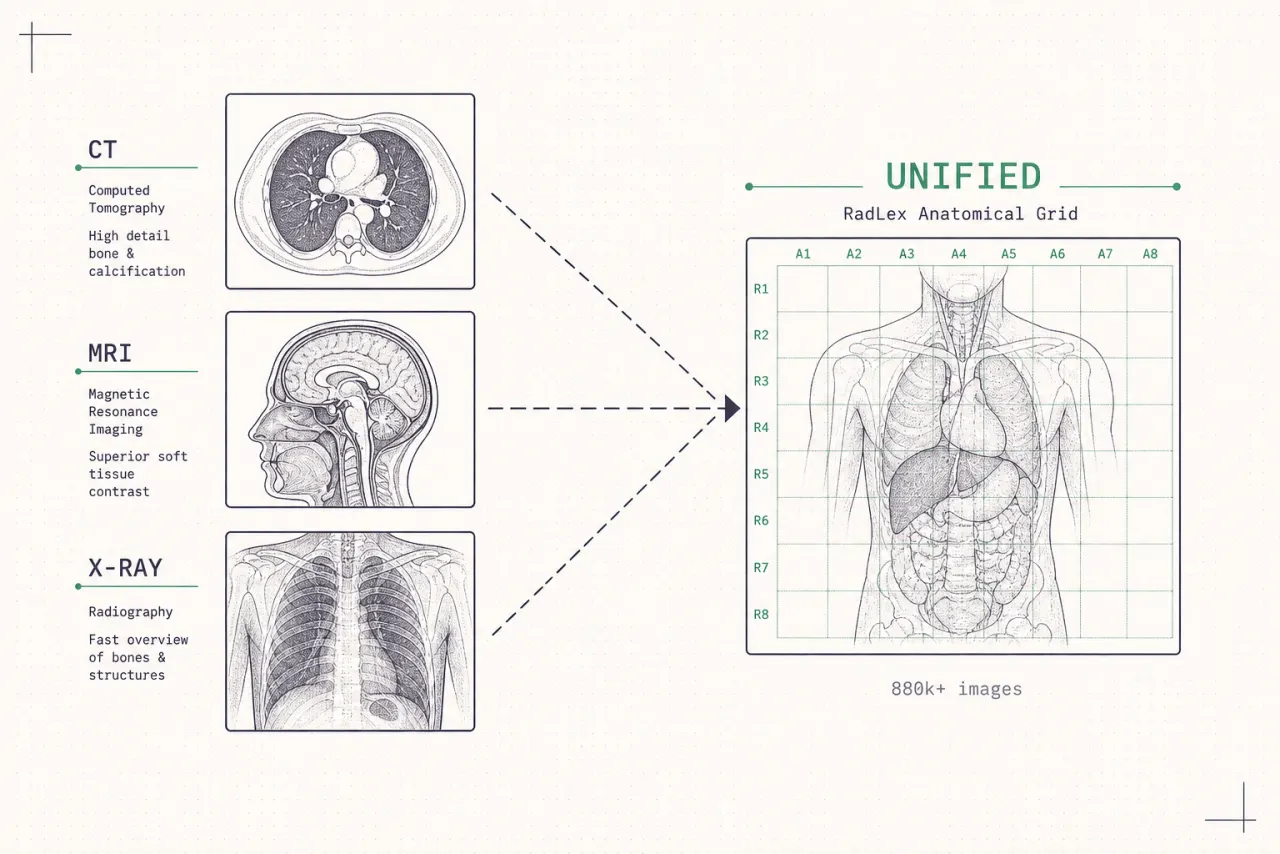
UMIE Datasets
Open-source pipelines that standardize 880k+ images across 20+ medical imaging datasets (CT, MRI, X-ray) into a unified format with RadLex-compliant labels.
Zobacz projekt →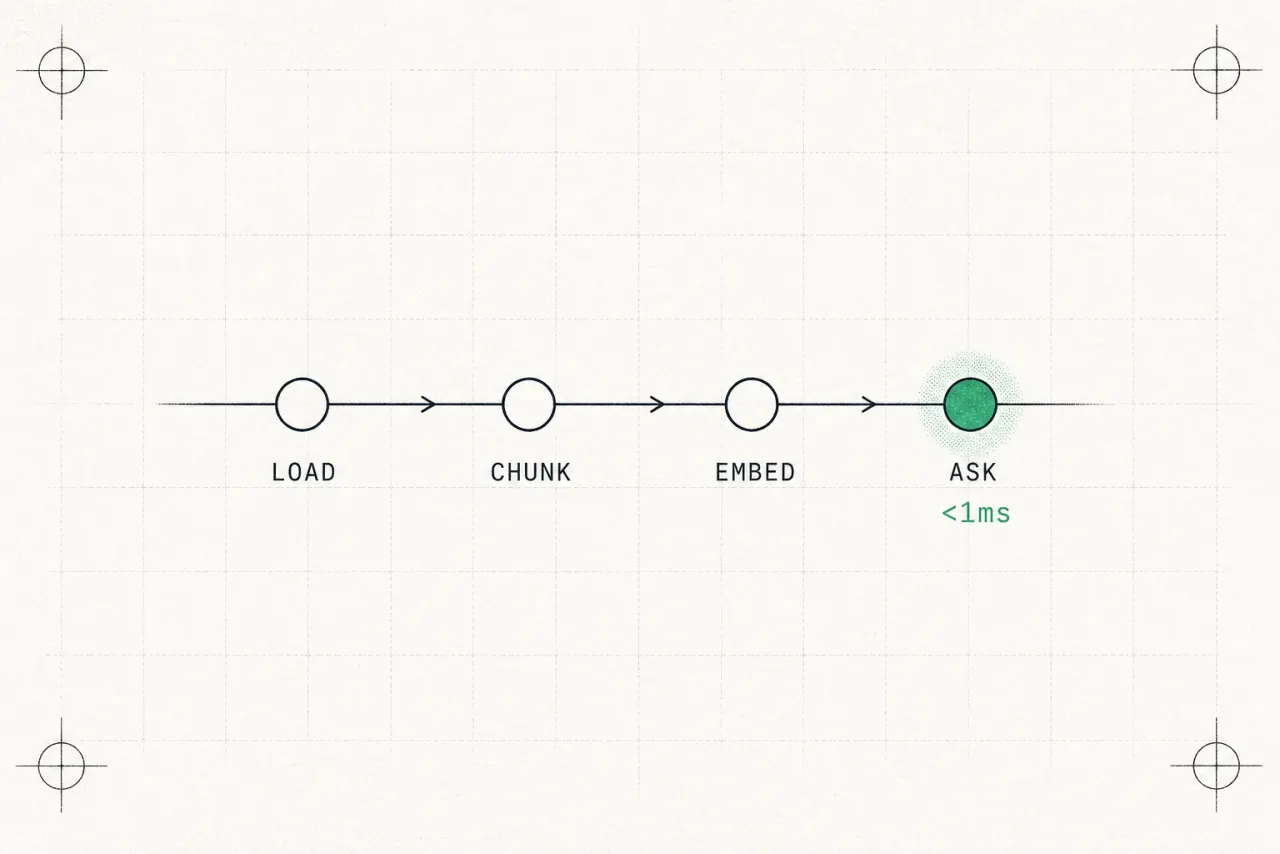
RocketRAG
A speed-focused Retrieval-Augmented Generation framework packaging document ingestion, semantic chunking, vector storage, and LLM inference into a pluggable CLI and FastAPI toolkit.
Zobacz projekt →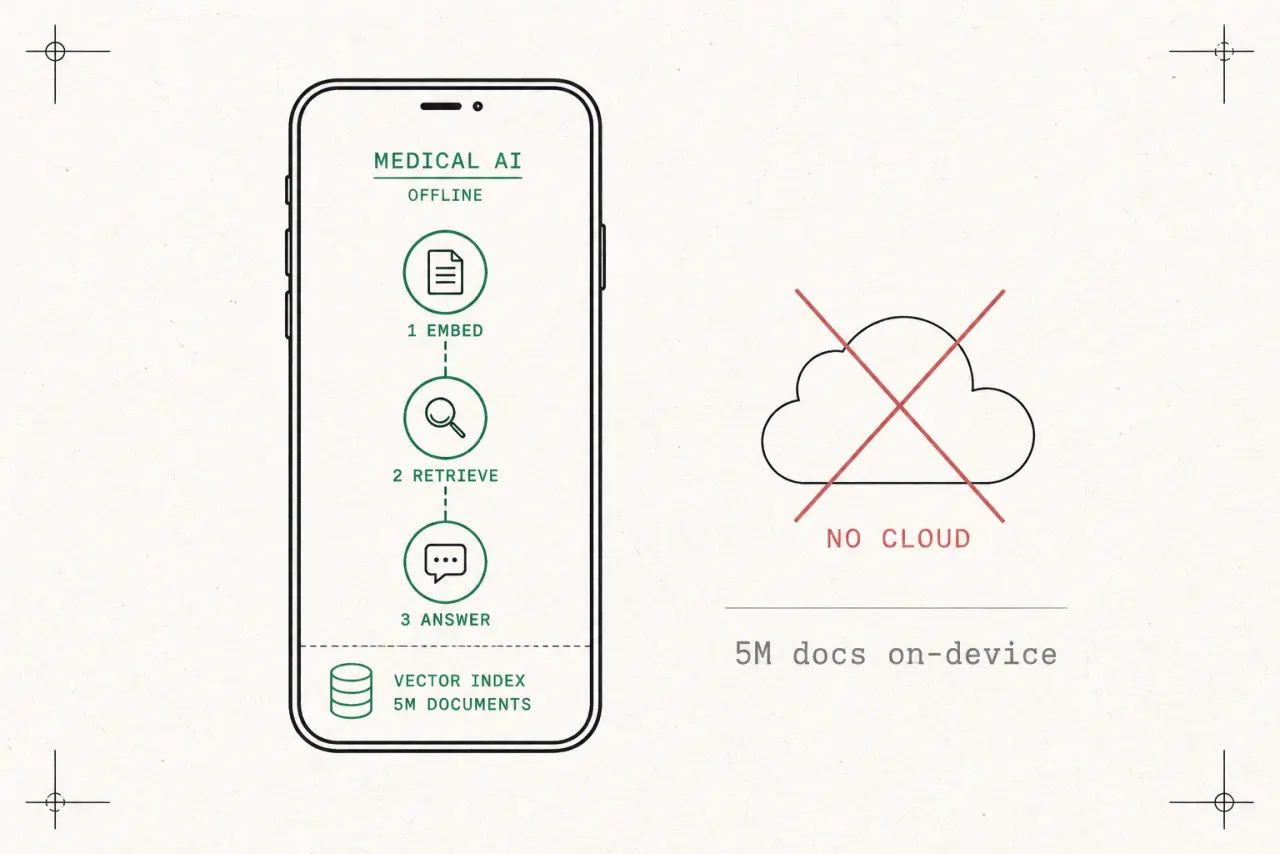
LOMA — Offline Medical AI Assistant
A zero-cloud mobile medical assistant that runs the full pipeline — embeddings, retrieval, and language model responses — entirely on the user's phone.
Zobacz projekt →